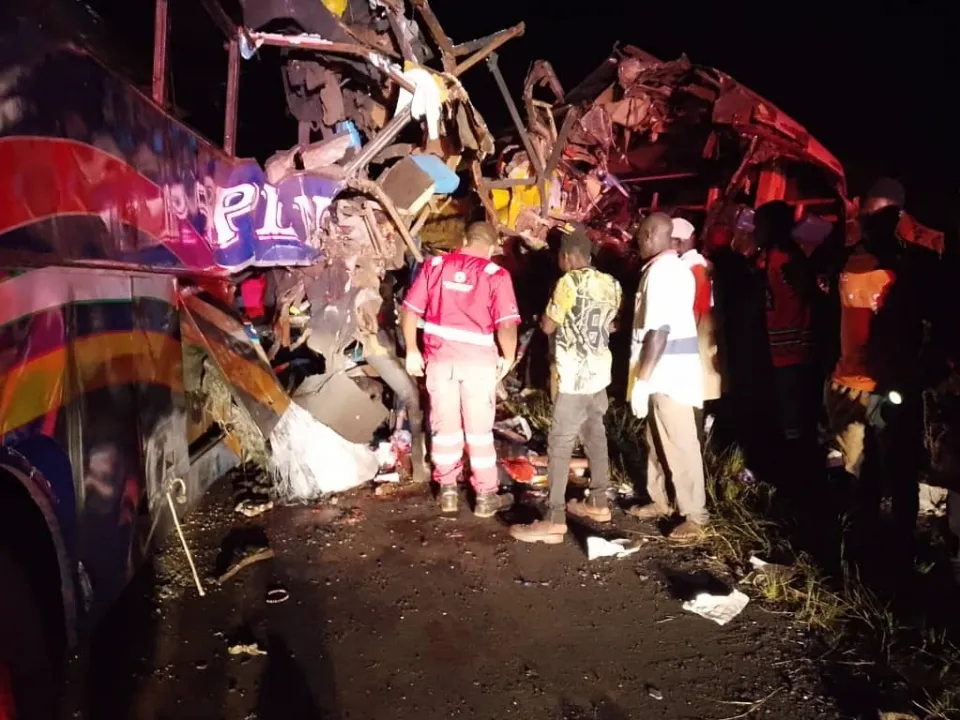
On October 22, 2025, a devastating road accident occurred near Kiryandongo in western Uganda, leaving at least 46 people dead and dozens more injured. The crash involved two passenger buses, a lorry, and a private car. Authorities initially reported 63 deaths, but later revisions confirmed that some critically injured passengers survived. The tragedy highlights the ongoing road safety challenges in Uganda and the urgent need for stricter traffic enforcement.
Details of the Accident
The collision took place around 12:15 a.m. local time near Kitaleba Village, approximately 15 kilometers from Kiryandongo town. Both buses, operated by Planet Company and Nile Star, were traveling in opposite directions on the Kampala-Gulu Highway. Witnesses reported that the drivers tried to overtake slower vehicles simultaneously, causing the two buses to collide head-on. The impact caused a chain reaction involving a Tata lorry and a Toyota car, leading to a massive pile-up.
Emergency responders rushed to the scene, extracting survivors and transporting the injured to Kiryandongo Hospital and local clinics. Many of the injured suffered multiple fractures, burns, and internal injuries, overwhelming the local healthcare facilities. The bodies of the deceased were taken to Kiryandongo Hospital mortuary for identification and post-mortem examinations.
Causes and Contributing Factors
Uganda Police have identified reckless overtaking and high speed as the primary causes of the crash. Road users frequently engage in risky maneuvers, especially on busy highways, increasing the likelihood of head-on collisions. Poor road conditions, inadequate signage, and limited street lighting also contribute to accidents in the region.
Experts warn that driver fatigue may have played a role. Long-distance bus operators often work extended hours without adequate rest, increasing the probability of human error. The buses involved in the crash were reportedly carrying more passengers than their licensed capacity, raising safety concerns about overloading.
Government and Community Response
Ugandan President Yoweri Museveni expressed deep condolences to the families of the victims. He announced government compensation for those affected and called for immediate measures to improve road safety. Local authorities in Kiryandongo pledged to investigate the crash thoroughly and implement stricter vehicle inspection protocols.
Community members rushed to assist survivors and recover the injured. Volunteers provided food, water, and temporary shelter for those displaced by the accident. Religious leaders also visited the site to offer prayers and comfort to grieving families. The outpouring of support highlights the communal spirit in the face of tragedy.
Historical Context of Road Safety in Uganda
Uganda has faced recurring road safety challenges over the years. In 2018, a similar accident in Kiryandongo District claimed 22 lives, demonstrating a persistent pattern of fatal crashes. According to the Uganda Police Force, traffic accidents cause over 3,000 deaths annually, with passenger buses and motorcycles being the most frequent victims.
Authorities have implemented road safety campaigns, including public awareness drives, speed limit enforcement, and mandatory driver training programs. Despite these measures, high traffic density, vehicle overloading, and reckless driving continue to make Ugandan roads hazardous.
Human Impact
The human toll of the accident is staggering. Families have lost loved ones, while survivors face long recovery periods. Hospitals are stretched thin, and local health systems are struggling to cope with the influx of critically injured patients. Many victims come from low-income families, compounding the social and economic impact of the crash.
The psychological trauma is significant. Survivors report experiencing shock, nightmares, and anxiety. First responders and local volunteers also face mental health challenges due to the scale of the disaster. Humanitarian organizations have emphasized the need for counseling services to support affected communities.
Road Safety Recommendations
Experts recommend several measures to prevent future tragedies:
- Strict Enforcement of Traffic Laws: Authorities should monitor speed limits, overtaking, and overloading regulations.
- Improved Road Infrastructure: Better lighting, signage, and road maintenance can reduce accidents.
- Driver Training Programs: Regular training and certification programs can improve driver safety awareness.
- Passenger Safety Awareness: Campaigns educating passengers on the risks of overloading and unsafe practices can encourage safer travel.
- Emergency Preparedness: Strengthening local hospital capacity and emergency response systems can reduce casualties during accidents.
International Response
The crash has drawn attention from international media and road safety organizations. Agencies have called for urgent interventions to reduce road fatalities in Uganda. Road safety experts suggest adopting international best practices, such as seat belt enforcement, speed cameras, and stricter bus operating standards.
Conclusion
The October 22 road crash near Kiryandongo is a tragic reminder of Uganda’s ongoing road safety crisis. With over 40 lives lost and many more injured, the incident underscores the urgent need for stricter traffic enforcement, infrastructure improvements, and public awareness campaigns.
As authorities investigate the causes and implement preventive measures, the nation must confront the broader systemic issues that make such tragedies recurrent. For families affected, the road to recovery will be long, but community support and government intervention provide a path forward.