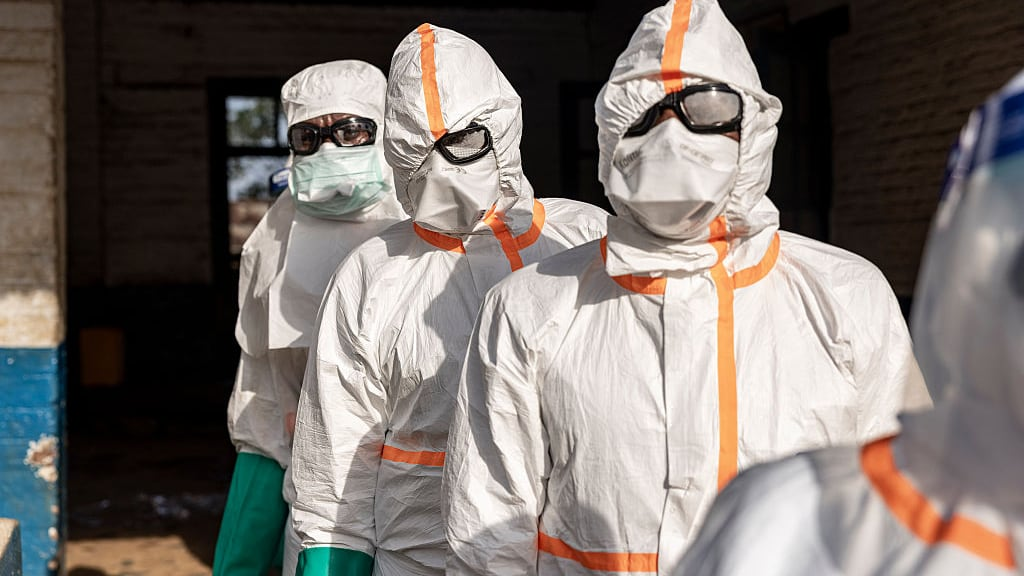
A worsening Ebola outbreak involving the Bundibugyo strain is rapidly spreading across the Democratic Republic of the Congo and Uganda, raising growing fears of a broader regional health emergency in East and Central Africa.
According to Situation Report #2 released by Project HOPE on May 27, 2026, the outbreak has now resulted in:
- More than 900 suspected cases
- 223 suspected deaths
- 112 confirmed cases
- 11 confirmed deaths
The escalating crisis has intensified concerns about possible cross-border spread into:
- South Sudan
which is already grappling with severe humanitarian instability.
Bundibugyo Ebola Strain Driving Regional Outbreak
The current outbreak involves the:
- Bundibugyo strain of Ebola virus
a less common but still highly dangerous form of the virus.
Unlike some previous Ebola outbreaks where vaccines played a central role in containment, health authorities currently face a major challenge because:
- No approved vaccine is readily available for the Bundibugyo strain
This limitation is forcing health agencies to rely heavily on:
- Infection prevention and control (IPC)
- Community education
- Contact tracing
- Isolation procedures
- Hotspot identification
to slow transmission.
Uganda Confirms New Cases Through Contact Tracing
In Uganda, authorities have confirmed:
- Seven cases
- One death
Five of the confirmed cases were identified through contact tracing connected to the first two infections.
One infected individual is reportedly:
- A healthcare worker
who treated an earlier Ebola patient.
The case has intensified concerns about:
- Healthcare worker exposure
- PPE shortages
- Hospital transmission risks
- Infection control weaknesses
Health Workers Face Rising Exposure Risks
The infection of frontline healthcare personnel highlights the urgent need for:
- Personal Protective Equipment (PPE)
- IPC training
- Emergency medical supplies
- Clinical isolation infrastructure
Health workers are often among the highest-risk groups during Ebola outbreaks because of:
- Close patient contact
- Limited protective resources
- Overstretched medical systems
Humanitarian agencies warn that inadequate protection for caregivers could accelerate:
- Hospital-based transmission
- Workforce depletion
- Public health system collapse
DRC Remains Epicenter of Outbreak
The:
- Democratic Republic of the Congo
continues recording the overwhelming majority of infections.
According to Project HOPE:
- Over 900 suspected cases
- 223 suspected deaths
- 105 confirmed cases
- 10 confirmed deaths
have been reported across:
- Ituri Province
- North Kivu
- South Kivu
The increase reflects both:
- Continued disease spread
- Expanded testing efforts
across affected regions.
Regional Spread Concerns Intensify
Health authorities are increasingly concerned that the outbreak could already be spreading into:
- South Sudan
The risk is especially alarming because South Sudan faces:
- Humanitarian instability
- Population displacement
- Weak healthcare infrastructure
- Ongoing conflict-related pressures
Cross-border movement remains difficult to control in several affected regions because of:
- Porous borders
- Refugee movements
- Informal trade routes
- Limited surveillance capacity
Uganda Tightens Border Controls
In response to the outbreak, Uganda has introduced stricter containment measures including:
- Suspension of air travel to DRC
- Closure of several border crossings
- Enhanced border health screening
The government is also intensifying:
- Contact tracing
- Public awareness campaigns
- Medical surveillance
- Quarantine preparedness
Uganda has extensive prior experience managing Ebola outbreaks and is considered one of Africa’s stronger outbreak-response countries.
However, officials warn that the current outbreak remains highly volatile.
Project HOPE Deploys Emergency Response Team
Project HOPE confirmed deployment of an emergency response team to Uganda.
The team includes:
- An epidemiologist
- An emergency physician
both with significant Ebola response experience.
The organization says it is coordinating with:
- Local health authorities
- Humanitarian partners
- Regional response agencies
to support outbreak containment.
Ebola Continues Threatening Fragile African Health Systems
The outbreak underscores the continuing vulnerability of several African healthcare systems to infectious disease emergencies.
Many affected areas already face:
- Limited hospital capacity
- Supply shortages
- Understaffed clinics
- Inadequate laboratory infrastructure
- Conflict-related instability
These structural challenges can severely complicate:
- Rapid diagnosis
- Isolation procedures
- Case management
- Public communication
during fast-moving outbreaks.
No Immediate Vaccine Adds Complexity
The absence of a near-term vaccine for the Bundibugyo strain represents one of the most serious complications in the response effort.
During previous Ebola outbreaks involving the:
- Zaire strain
vaccination campaigns played a major role in reducing transmission.
Without that option, authorities must rely primarily on:
- Early detection
- Isolation
- Hygiene practices
- Community cooperation
which often require extensive logistical coordination.
Community Education Critical to Containment
Public health experts stress that community trust and awareness remain essential for outbreak control.
Ebola response efforts frequently depend on:
- Public cooperation
- Safe burial practices
- Early symptom reporting
- Reduced stigma
- Accurate health communication
Misinformation and distrust can significantly undermine containment strategies, particularly in conflict-affected areas.
Humanitarian Crisis Risks Expanding
The outbreak is unfolding within a broader context of regional instability involving:
- Conflict displacement
- Food insecurity
- Economic strain
- Weak public infrastructure
Humanitarian organizations warn that simultaneous crises can overwhelm already fragile health systems and slow outbreak response capacity.
If infections spread into densely populated urban centers or refugee corridors, containment could become substantially more difficult.
Frequently Asked Questions
What strain of Ebola is involved?
The outbreak involves the:
- Bundibugyo strain of Ebola virus.
How many cases have been reported?
More than:
- 900 suspected cases
- 112 confirmed cases
have been reported across DRC and Uganda.
Is there a vaccine available?
No approved vaccine is currently available for the Bundibugyo strain in the near term.
Which countries are affected?
The outbreak is primarily affecting:
- Democratic Republic of the Congo
- Uganda
with concerns about spread into:
- South Sudan
What measures are being used to control the outbreak?
Authorities are relying on:
- Contact tracing
- Infection prevention
- Border screening
- Community education
- Isolation protocols
Conclusion
The rapidly worsening Ebola outbreak in the Democratic Republic of the Congo and Uganda is becoming one of Africa’s most urgent public health emergencies of 2026.
With no immediate vaccine available for the Bundibugyo strain, health authorities and humanitarian organizations are racing to contain transmission through surveillance, contact tracing, infection control, and community engagement.
As fears grow over potential regional spread into vulnerable neighboring countries, the coming weeks could prove critical in determining whether the outbreak remains localized or escalates into a much broader humanitarian and health crisis across East and Central Africa.