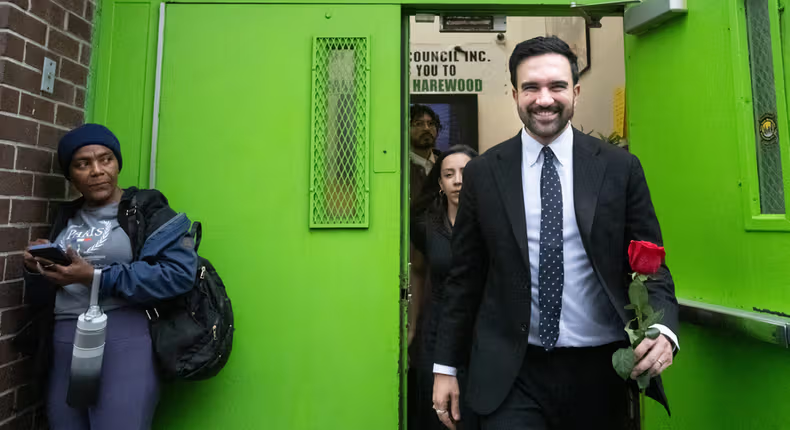
In a groundbreaking victory, Zohran Mamdani, born in Kampala, Uganda, was announced as the new Mayor of New York on November 5, 2025. Mamdani’s win represents a major milestone for the Democratic Party, which has not secured the mayoral seat since Donald Trump’s second presidential term. Mamdani’s success also marks a first for New York, as he becomes the city’s first Muslim, South Asian, and African-born mayor.
His victory was not without significant opposition, particularly from key political figures like Donald Trump and several billionaires who backed his competitors. Despite facing powerful adversaries, including former New York Governor Andrew Cuomo, Mamdani secured a commanding 50% of the vote, with Cuomo trailing at 41.4% and Republican candidate Curtis Sliwa garnering only 7.7%. Zohran Mamdani New York mayor
In his victory speech, Mamdani emphasized themes of social justice, economic equality, and his pro-immigrant stance. He passionately proclaimed that New York would remain a city of immigrants and that his victory was a testament to the power of diversity in the United States. “So hear me, President Trump, when I say this: to get to any of us, you will have to get through all of us,” Mamdani declared, signaling a strong opposition to Trump’s immigration policies.
Mamdani’s rise to power comes after years of advocating for progressive changes in the city. His statements against the concentration of wealth in the hands of a few billionaires were a focal point of his campaign. He argued that the city’s inequality was a result of the massive wealth held by New York’s 123 billionaires, who collectively control $759 billion. Mamdani’s stance was clear: billionaires should not exist in a time of such inequality, a sentiment that did not sit well with many wealthy New Yorkers.
The battle between Mamdani and the billionaire class reached its peak when figures like Bill Ackman, Joe Gebbia, Barry Diller, and Mike Bloomberg poured millions of dollars into Cuomo’s campaign in an effort to prevent Mamdani from taking office. In response, Mamdani remained steadfast, stating during his campaign that he intended to raise corporate taxes and increase income taxes on millionaires by two percentage points to help fund social programs and infrastructure development.
Despite the opposition from Trump and the city’s wealthiest residents, Mamdani’s message resonated with a broad swath of voters who sought change. Mamdani’s victory marks a shift in the city’s leadership, as he takes office as New York’s youngest mayor in a century, bringing a fresh perspective to the city’s governance. His pro-immigrant rhetoric, paired with his commitment to dismantling systems of inequality, made his win a victory for progressive values.
As New York embarks on this new chapter with Mamdani at the helm, his leadership will likely reshape the city’s political landscape, challenging the old guard while advocating for the marginalized and working-class populations. With the billionaire class’s influence waning, Mamdani is ready to implement policies that address economic disparities, ensuring a more equitable future for all New Yorkers.