
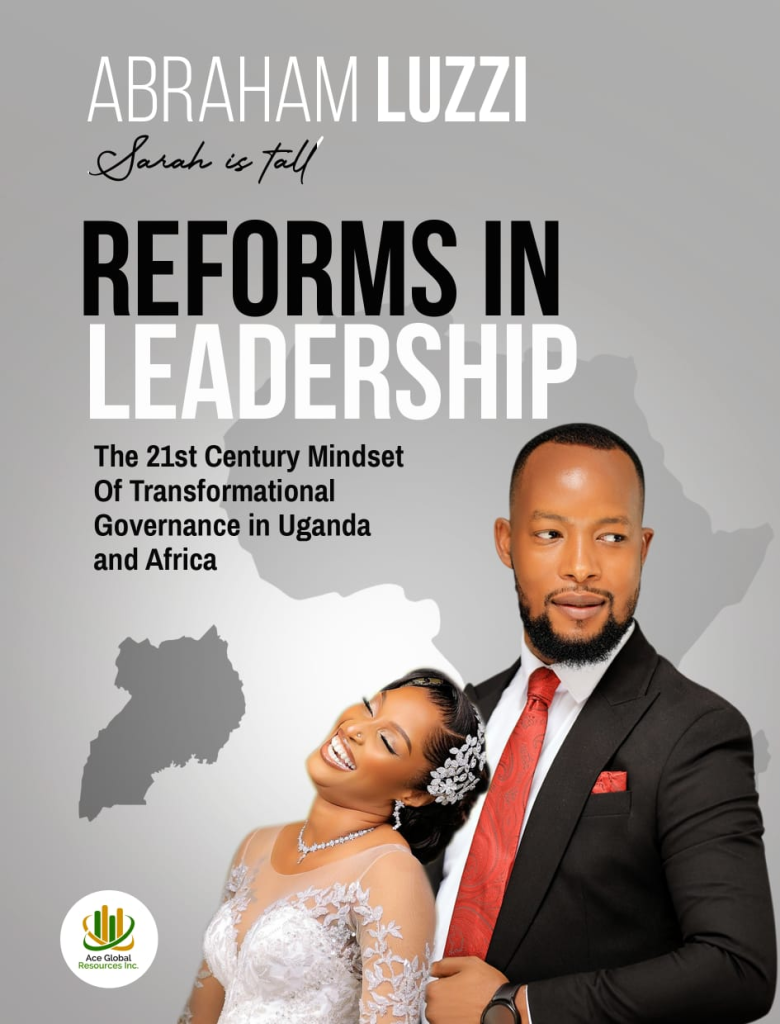
In today’s world, the idea of leadership is often tied to control, power, and dominance. However, in Reforms in Leadership, Abraham Luzzi offers a compelling counter-narrative: leadership should be about service, moral clarity, and responsibility. As societies around the world struggle with institutional trust and declining governance standards, Luzzi’s book seeks to reframe leadership, especially for those in positions of authority.

The book isn’t political rhetoric or a manifesto for a campaign; rather, it is a governance manual. Luzzi challenges the notion that societal decline is inevitable. He contends that real renewal comes from redesigning leadership, focusing on competence, systems, and accountability. His work seeks to provide practical, implementable strategies to restore order, dignity, and transparency in governance.
Leadership as Service: Putting People First
One of the key arguments in Reforms in Leadership is the idea that leadership should be viewed not as a position of power, but as an act of service. Leaders, Luzzi writes, should be facilitators of positive change and development, not figures who impose their will. This radical shift in perspective challenges traditional power structures by emphasizing empathy, collaboration, and putting the needs of citizens above personal or political gain.
Luzzi argues that leadership rooted in service fosters trust, promotes collective well-being, and encourages participatory governance. When leaders focus on serving their constituents, they create an environment where people feel valued and empowered to contribute to the nation’s progress.

Competence and Accountability: The Heart of Effective Leadership
The book firmly ties leadership to competence and accountability. According to Luzzi, good leaders are not merely figureheads or symbols of power—they are individuals who demonstrate exceptional competence in their field and are held accountable for their actions. He challenges the conventional idea that leadership positions should be filled based on credentials alone. Instead, leadership must be earned through proven capability and consistent performance.
Luzzi’s argument highlights a critical flaw in many current systems: the failure to align leadership with competence. Leaders should be selected for their ability to deliver meaningful results, and they must be held accountable for their decisions. This is where the concept of transparency comes into play—Luzzi insists that true leaders must be open about their actions and their outcomes, fostering an environment where accountability is a shared value.
Action Over Words: A Practical Approach to Leadership
While many leadership books focus on theoretical ideas, Luzzi’s approach in Reforms in Leadership is grounded in execution. He doesn’t just talk about leadership values; he provides a roadmap for how these values should translate into actionable steps. This focus on execution sets the book apart, as it connects ethical principles to real-world outcomes.
Luzzi emphasizes that values such as integrity, transparency, and responsibility should directly shape policies and decisions. The book links these values with measurable results, showing how ethical leadership can transform systems, institutions, and societies. For Luzzi, leadership is not about idealistic speeches but about concrete, tangible progress that benefits everyone.
Challenging Traditional Leadership Norms
Luzzi’s work also takes aim at some long-standing traditions in leadership thinking. For example, he critiques the reliance on credentialism, which often elevates leaders based on their education or connections rather than their actual ability to lead effectively. Luzzi proposes that leadership should be based on skills, experience, and demonstrated results, not just titles or degrees.
In addition to challenging credentialism, Luzzi argues against the idea of charity-based governance. Instead of using charity as a way to address systemic issues, he calls for a leadership model that fosters self-sufficiency and long-term solutions. For Luzzi, leadership must focus on solving problems, not providing temporary relief, and this requires a shift in how leaders approach governance and policy-making.
Global Leadership: A Framework for All
Although Luzzi’s framework is rooted in African contexts, the principles of Reforms in Leadership are universally applicable. The book extends beyond national boundaries, offering leadership insights that can be applied in diverse global contexts. Luzzi’s insistence on service, competence, and accountability resonates in any setting where effective governance is needed.
In today’s interconnected world, where political and economic challenges often transcend borders, Luzzi’s approach provides a valuable model for leaders worldwide. It calls for a leadership style that is practical, results-oriented, and built on the principles of respect for human dignity and collective responsibility.
For Leaders, Public Servants, and Citizens
While Luzzi is an independent candidate in the 2026 elections, Reforms in Leadership is not a campaign tool. Instead, it is a guide for anyone who believes that leadership should prioritize service, deliver results, and restore trust. The book speaks to politicians, public servants, entrepreneurs, and even citizens, urging them to understand that sustainable change does not come from promises but from the systems that support good governance.
Reforms in Leadership challenges leaders to move beyond rhetoric and ideology, focusing instead on practical, implementable reforms. It provides a step-by-step framework for leaders at all levels—whether in government, business, or civil society—to put people at the center of their governance strategies.
Where to Find Reforms in Leadership
The book is available in both eBook and physical formats. The eBook edition can be purchased on platforms like Amazon, while physical copies are available for international orders. In Kenya, readers can preorder signed copies, reflecting the growing interest in Luzzi’s vision of leadership.
Conclusion: A New Era of Leadership
Abraham Luzzi’s Reforms in Leadership presents a bold and transformative vision for leadership in the modern world. By rethinking leadership as a service and rooting it in competence, accountability, and execution, Luzzi offers a blueprint for rebuilding trust in institutions and improving governance globally. This is a book for anyone who is ready to move beyond the failures of the past and embrace leadership that works for the people, not against them.
Luzzi’s message is clear: leadership is not about dominating—it is about restoring, rebuilding, and transforming societies through ethical action and responsible governance.