Uganda’s Cabinet has directed traders operating businesses in basement spaces originally designated for parking to vacate immediately, citing flooding risks and violations of approved building plans.
KAMPALA, Uganda — November 10, 2026: The Ugandan government has ordered traders operating businesses in basement spaces designated for parking to vacate immediately, as authorities move to address safety concerns and enforce compliance with approved building plans in Kampala’s commercial buildings.
The directive was announced by the Minister of Information, Communications Technology and National Guidance, Justine Kasule Lumumba, during a press briefing at the Uganda Media Centre on Tuesday, following Cabinet deliberations held on Monday, November 9.
Lumumba said some property owners had converted underground parking facilities into shops and other commercial premises, contrary to the purposes specified in their approved building plans.
The government maintains that such conversions expose occupants and their merchandise to significant risks, particularly during periods of heavy rainfall when underground spaces are vulnerable to flooding.
According to the minister, Cabinet directed traders occupying affected basement premises to vacate immediately, while building owners were urged to comply with the original designs approved by the relevant planning authorities.
Directive Follows Devastating Kampala Floods
The decision comes against the background of severe flooding that affected several commercial buildings in Kampala’s central business district on October 30 and 31, 2025.
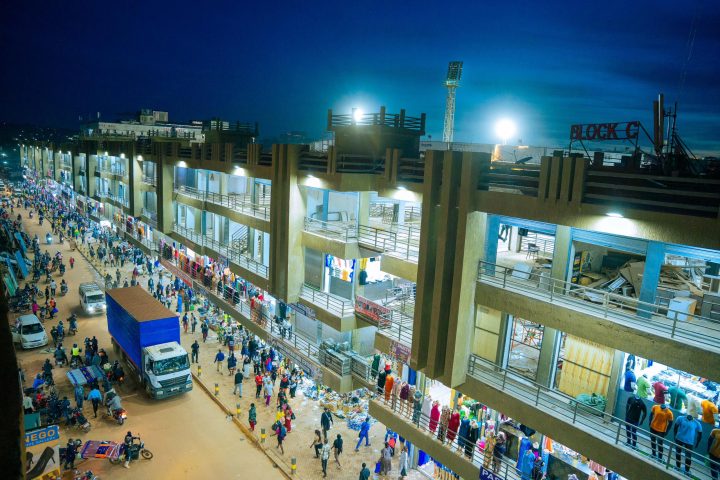
Heavy rainfall inundated shops and underground trading spaces, damaging merchandise and disrupting commercial activity in areas surrounding Nakivubo Channel and St. Balikuddembe Market, commonly known as Owino.
The flooding affected several shopping arcades, including Nana Arcade, Capital Centre, Pentagon Plaza, French Plaza, Premier Arcade, Qualicel Mall and Ssekaziga Arcade.
Government assessments subsequently identified several contributing factors, including blocked drainage outlets, inadequate underground drainage infrastructure, accumulated waste and interference with stormwater channels.
The findings also raised concerns about developments that obstruct natural water movement, increasing the vulnerability of surrounding properties during heavy rainfall.
Cabinet Approves Financial Assistance for Traders
Alongside the directive, Cabinet approved Shs18.9995 billion in financial assistance for 1,841 verified traders affected by the October 2025 floods.
The assistance will be provided on an ex-gratia basis, meaning the government is extending financial support without acknowledging a legal obligation to compensate those affected.
Cabinet also approved additional financial support for the Federation of Uganda Traders Associations (FUTA), including funding for operational expenses and a contribution to its revolving fund.
The Office of the Prime Minister will coordinate implementation of the approved interventions in collaboration with relevant government agencies and representatives of affected traders.
Questions Over Building Compliance and Enforcement
The latest directive places renewed attention on the responsibilities of property developers, landlords and regulatory authorities in ensuring that commercial buildings are used according to their approved designs.
Under the proposed enforcement measures, the Kampala Capital City Authority (KCCA), working with the Office of the Prime Minister and the Ministry of Works and Transport, is expected to develop a coordinated plan to restore affected basement spaces to their approved use.
The agencies have been given one month to present the implementation plan to Cabinet.
The directive could affect traders who have operated businesses in underground premises for extended periods, raising questions about relocation arrangements, existing tenancy agreements and the responsibilities of landlords who converted parking spaces into commercial units.
While the government has emphasised public safety and compliance with building regulations, the practical implementation of the directive will depend on how authorities identify non-compliant premises and manage the displacement of affected businesses.
The decision highlights the continuing challenge of balancing commercial development, urban planning requirements and public safety in Kampala’s rapidly expanding business district.