Uganda Private Capital Concentration has reached an estimated US$10.3 billion, representing nearly one-sixth of national output in a US$65 billion frontier economy. The figure underscores a high degree of capital aggregation in sectors dominated by tangible, income-producing assets.
In a financial system where public markets remain relatively shallow, wealth accumulation has largely occurred through privately controlled enterprises and commercial real estate.
Asset-Backed Wealth Dominance
A structural review of leading fortunes shows that high-density commercial property forms the valuation core. Kampala’s central business district and surrounding retail corridors anchor many of the country’s largest private holdings.
Key valuation drivers include:
• Prime land scarcity
• Tenant occupancy levels
• Rental yield stability
• Urban foot traffic density
This model provides predictable cash flow but remains sensitive to retail demand cycles.
Diversified Conglomerate Structures
Some fortunes combine property with hospitality, education, insurance and export-linked businesses. These conglomerate structures introduce sectoral diversification and foreign-exchange income.
However, tourism exposure and currency movements remain influential variables.
The Uganda Private Capital Concentration trend therefore spans both rent-intensive and operationally diversified models.
Industrial and Distribution Exposure
Fuel distribution, beverage manufacturing, agro-processing and vertically integrated retail networks represent the second major wealth pillar.
Distribution-based models generate recurring liquidity tied to transport demand and consumer spending. Manufacturing participation captures margin beyond pure land appreciation but increases exposure to commodity input costs.
According World Bank economic data, Uganda’s urbanization and services growth continue to support asset-backed capital formation (https://www.worldbank.org/en/country/uganda).
Equity-Driven Wealth
Unlike property-dominant peers, equity-based wealth structures link valuation directly to enterprise performance. Telecommunications and infrastructure shareholdings represent the most visible equity exposure in Uganda’s private capital landscape.
This structure is earnings-sensitive and subject to regulatory adjustments but benefits from sector diversification.
Infrastructure Catalysts
Telecommunications liberalization and energy-sector reforms created accumulation windows for private capital. Infrastructure-linked portfolios now combine operational turnover with long-term asset stability.
The International Monetary Fund identifies infrastructure expansion as a key driver of Uganda’s medium-term growth outlook (https://www.imf.org/en/Countries/UGA).
Structural Implications
The rise of Uganda Private Capital Concentration reflects how wealth compounds in asset-dominant systems. In economies with limited capital market depth, land ownership and vertically integrated enterprises tend to outperform smaller-scale participation.
Within Uganda’s macroeconomic context of steady growth but modest per capita income, access to asset ownership remains the primary differentiator in wealth formation.
Leading Private Fortunes in Uganda
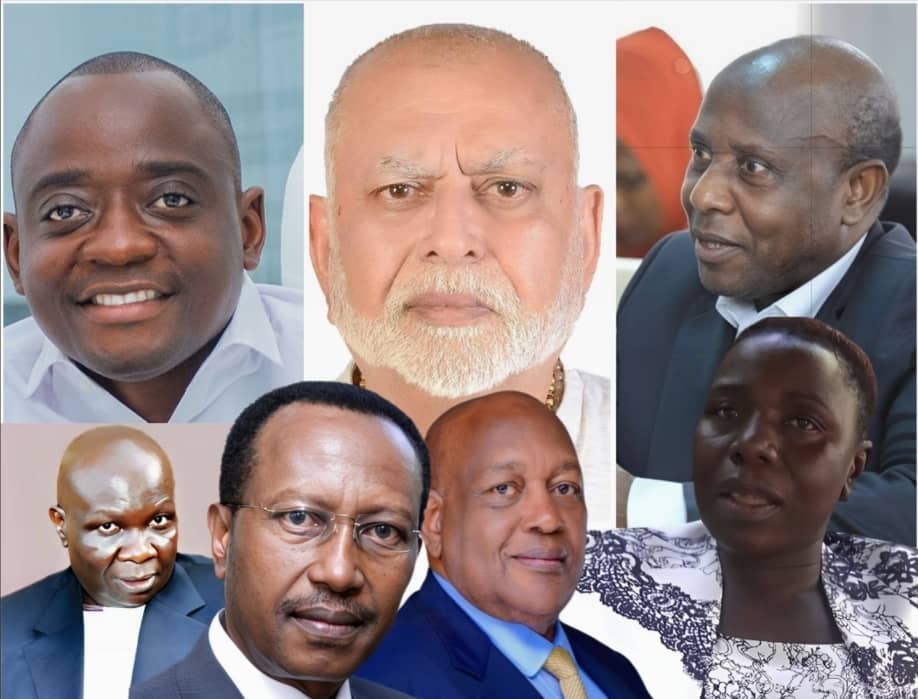
Uganda’s private capital landscape is shaped by a relatively small group of business leaders whose wealth is largely tied to real estate development, industrial manufacturing, distribution networks, finance, and telecommunications. Estimates of wealth vary because most assets are privately held.
| Rank | Individual | Estimated net worth (USD) | Primary sectors |
|---|---|---|---|
| 1 | Hamis Kiggundu | $1.35 billion | Real estate, Manufacturing, Fintech |
| 2 | Sudhir Ruparelia | $1.2 billion | Banking, hospitality, real estate |
| 3 | John Bosco Muwonge | $850 million | Manufacturing, consumer goods |
| 4 | Drake Lubega | $800 million | Commercial property |
| 5 | Mansoor Matovu (Yanga) | $790 million | Property development |
| 6 | Karim Hirji | $785 million | Manufacturing, distribution |
| 7 | Christine Nabukeera | $710 million | Real estate investments |
| 8 | Tom Kitandwe | $700 million | Property and finance |
| 9 | Gastor Lule Ntale | $670 million | Religious institutions, real estate |
| 10 | Godfrey Kirumira | $615 million | Fuel distribution, petroleum |
Note: Because most wealth in Uganda is privately held and not publicly disclosed, estimates are based on observable assets and business holdings rather than audited public filings.
As oil production scales and digital finance expands, the evolution of Uganda Private Capital Concentration will influence whether economic participation broadens or remains structurally concentrated.
The trajectory of ownership — not just GDP growth — will define Uganda’s next economic chapter.
READ: US Economy Shows Weak Signs as Retail Sales Stall and Debt Delinquencies Climb