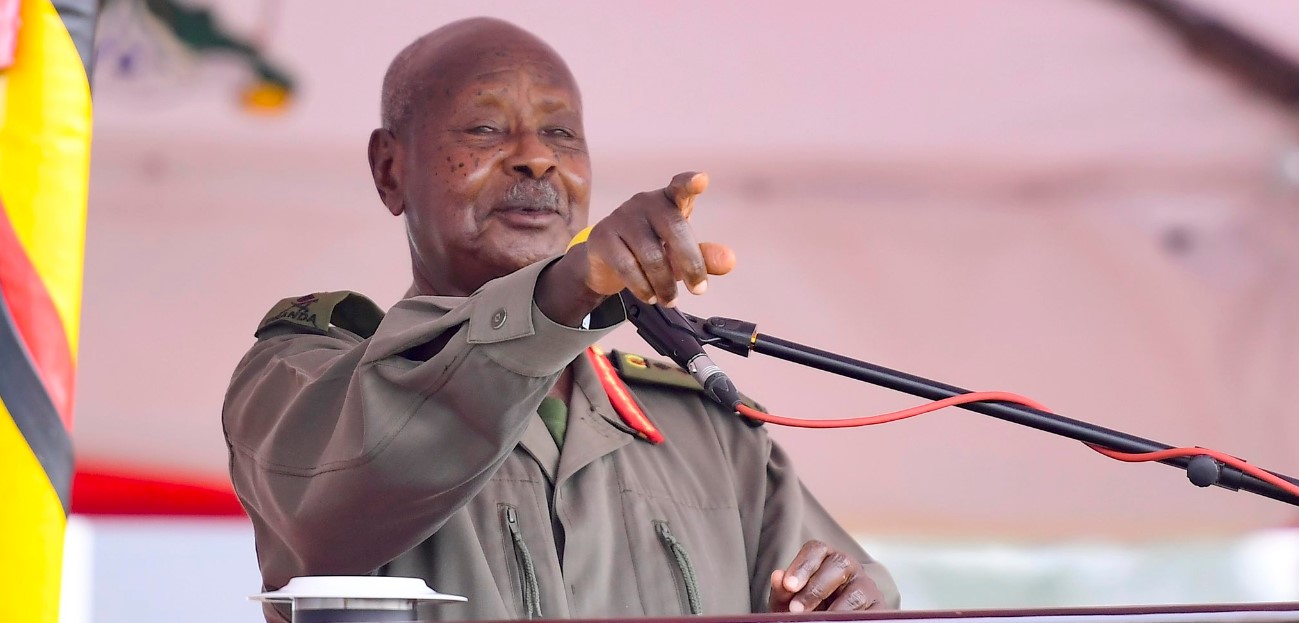
In a move that has ignited national and international debate, Ugandan President Yoweri Museveni signed the Uganda Peoples’ Defence Forces (Amendment) Act, 2025, into law. This legislation allows military courts to try civilians under certain circumstances, a practice that the Supreme Court had previously deemed unconstitutional earlier this year. The law has stirred heated discussions about national security, human rights, and the balance of power between Uganda’s military, judiciary, and executive branches. (Reuters)
Background and Legislative History
Uganda’s parliament passed the new law in May 2025 despite strong opposition. Human rights organizations and opposition politicians criticized the measure, warning that it could undermine judicial independence. They also argued that it could serve as a tool to suppress political dissent ahead of the 2026 presidential elections. (AP News)
Previously, the Supreme Court had struck down laws allowing military prosecution of civilians. The court cited concerns over impartiality, fairness, and the competence of military courts to handle civilian cases. Consequently, several high-profile cases were transferred from military tribunals to civilian courts, reinforcing the judiciary’s role as the guardian of constitutional rights. (Reuters)
Key Provisions of the Law
The amended legislation authorizes military courts to try civilians under specific scenarios. For example, civilians accused of collaborating with military personnel, possessing military equipment, or committing offenses linked to national security fall under the jurisdiction of military tribunals. (JURIST)
Supporters of the law argue that it strengthens national security. Military officials contend that the law will help deter the formation of militant political groups and allow faster prosecution of cases involving threats to public order. They claim that traditional civilian courts often struggle to handle cases related to armed violence or sensitive security matters, which can delay justice.
Reactions from Political and Human Rights Groups
The signing of the law provoked strong reactions. Opposition leaders immediately condemned the measure, asserting that it targets political opponents. Kizza Besigye, a prominent opposition figure previously tried in military courts, criticized the law as a strategic move to intimidate dissenters. (TRT Afrika)
Human rights organizations also voiced concerns. They warned that the legislation could erode civil liberties and politicize the judiciary. Organizations like Human Rights Watch emphasized that fair trial safeguards must remain intact. They called for transparency, accountability, and strict adherence to constitutional protections to prevent abuse. (HRW)
Anticipated Legal Challenges
Legal experts predict that opponents will challenge the law in courts. Since the Supreme Court had previously ruled military prosecution of civilians unconstitutional, challengers may argue that the new law violates the same principles. Legal teams are preparing petitions for judicial review, aiming to strike down or modify the legislation. (Reuters)
Furthermore, scholars argue that the law could face scrutiny under international human rights treaties to which Uganda is a signatory. Critics insist that military trials for civilians risk undermining the rule of law and could attract condemnation from international observers and organizations.
Political Implications Ahead of 2026 Elections
The law’s enactment comes at a politically sensitive time. With the 2026 presidential elections approaching, analysts suggest that the legislation may influence political strategies across the country. The government may use military courts to expedite prosecutions of politically motivated cases, while opposition parties fear harassment or detention. This move highlights ongoing tensions between the executive and judiciary, raising questions about checks and balances in Uganda’s governance.
Additionally, the law may affect voter confidence and public perception of justice. Citizens may feel either reassured about national security or threatened by the expanded powers of the military over civilian affairs.
National Security and Governance Perspective
Proponents argue that the law strengthens Uganda’s national security framework. The government claims that military courts can handle specialized cases more efficiently than civilian courts. In particular, offenses involving weapons, insurgency, or attacks on state institutions require swift, decisive action to prevent escalation.
President Museveni emphasized that the law aligns with the military’s mission to protect the nation. He stated that safeguarding public order requires legal mechanisms capable of addressing threats that ordinary civilian courts cannot always manage efficiently.
International Reactions
The international community reacted with caution. Human rights groups and foreign governments expressed concerns about potential abuses. They urge Uganda to respect the rule of law, protect civilians’ rights, and ensure fair trial procedures. Some diplomats have called for dialogue between government authorities, opposition parties, and civil society to prevent political polarization and unrest.
At the same time, international observers acknowledged Uganda’s security challenges, noting that the government faces genuine threats from armed groups and politically motivated violence. Balancing these security concerns with constitutional freedoms remains a key challenge for policymakers.
Conclusion
President Museveni’s signing of the Uganda Peoples’ Defence Forces (Amendment) Act, 2025, represents a pivotal moment in Uganda’s legal and political history. By granting military courts authority over civilians in specific cases, the law has reignited debates over national security, civil liberties, and the judiciary’s independence.
As legal challenges proceed, stakeholders will closely monitor the law’s implementation and its impact on Uganda’s political landscape. Moving forward, the government must ensure transparency, protect citizens’ rights, and maintain public trust while navigating security and political complexities. The unfolding situation will shape Uganda’s democratic institutions and governance for years to come.