What Did the Reports Say?
In mid‑August 2025, media outlets including CBS News reported that the United States had reached deals with multiple countries — including Uganda and Honduras — to accept “third‑country nationals” who were being deported from the U.S. but were not citizens of the U.S. or their home country. These so‑called third‑country deportation arrangements would form part of the Trump administration’s broadened immigration policy, which seeks to remove undocumented immigrants by sending them to countries other than their origin.
According to the CBS report, Uganda had “agreed to accept deportees from the US who hail from other countries on the continent, as long as they don’t have criminal histories.” Another version, carried by media like Associated Press and European outlets, reported that Uganda’s foreign ministry, through a statement, said it had entered a “temporary arrangement” with the U.S. under conditions: no criminal records, no unaccompanied minors, and a preference for African nationals.
That arrangement, if implemented, would make Uganda the latest African country joining this pattern — following Eswatini, Rwanda and South Sudan, all of which have been reported to accept U.S. deportees from third countries.
The Denial: Uganda Pushes Back
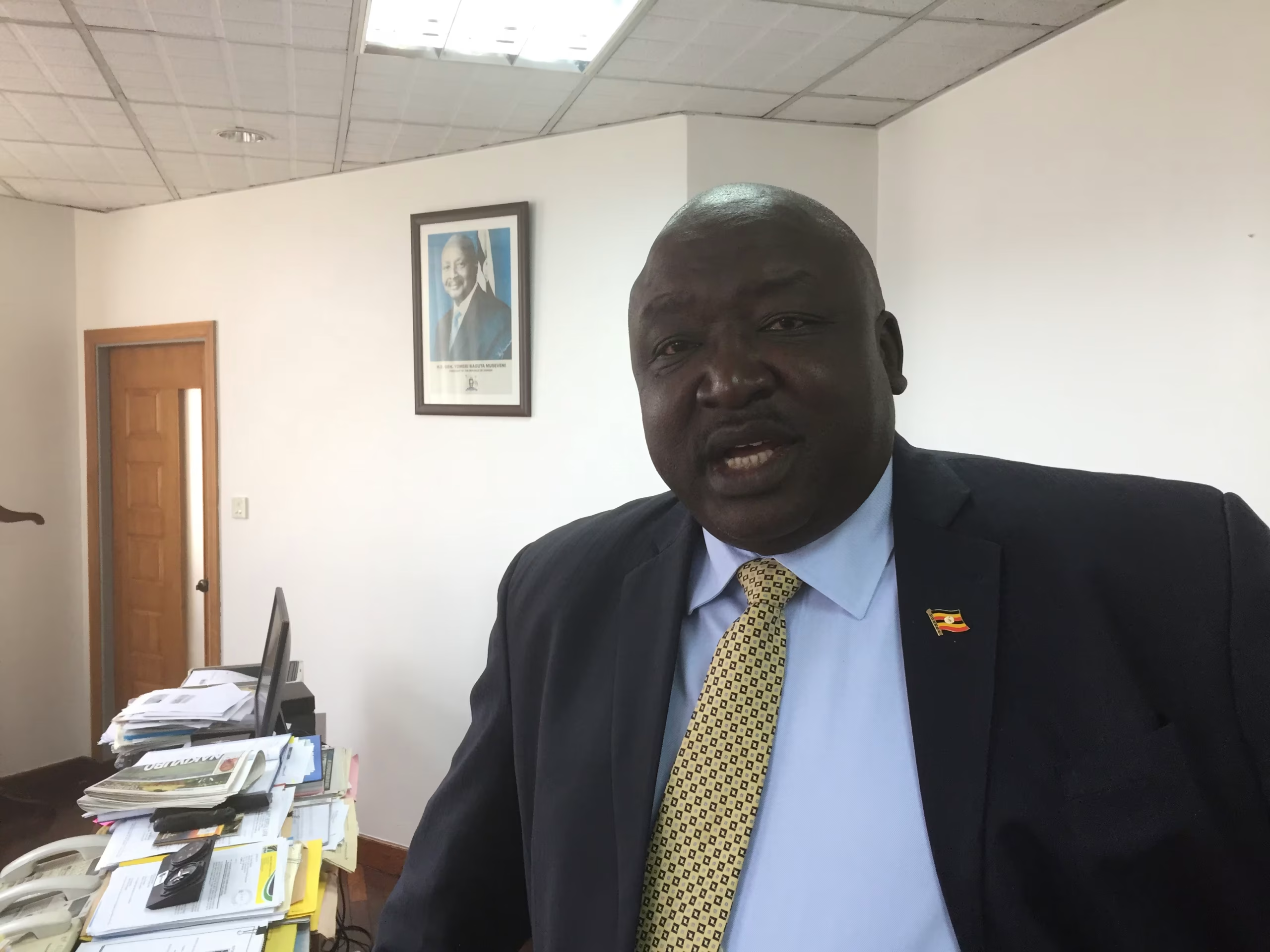
However, very shortly after those reports, a senior Ugandan official publicly denied the existence of any such agreement. On 20 August 2025, Uganda’s State Minister for Foreign Affairs, Henry Okello Oryem, told Reuters by text message:
“To the best of my knowledge we have not reached such an agreement. … We do not have the facilities and infrastructure to accommodate such illegal immigrants in Uganda. So, we cannot take in such illegal immigrants.”
He emphasised that Uganda had not signed a bilateral deportation deal, citing lack of capacity and the fact that the country already hosts a large refugee population — around 1.7 million people.
Thus, there is a clear contradiction between:
- Reports of a concluded or nearly concluded deal (announced by Uganda’s foreign ministry in some outlets) and
- The senior official’s denial of any agreement.
This confusion raises questions about what was actually negotiated, whether any deal exists, and how transparent the process has been.
Why the Confusion?
Several factors may explain the conflicting accounts:
- Multiple internal positions: Within Uganda’s government, different agencies or officials may have varying awareness or responsibility for the negotiations. The foreign ministry’s permanent secretary released a statement in favour of a deal; the state minister denied it.
- Preliminary versus binding agreements: The ministry’s statement described the arrangement as “temporary” and “modality‑details still being worked out.” It is possible that Uganda agreed in principle to some framework, but no legally binding treaty or operational agreement has yet been signed, which allowed the minister to deny that a final deal exists.
- Domestic and international pressure: Uganda already hosts refugees from Sudan, South Sudan, DRC and others; public backlash, political sensitivity about sovereignty, and rights concerns may have motivated the official to tamp down rumours. Meanwhile, U.S. media coverage may have oversimplified or mis‑reported discussions as deals.
- Strategic ambiguity: Both Uganda and the U.S. may benefit from ambiguity. Uganda could signal cooperation to gain diplomatic favour or trade leverage from the U.S., while retaining flexibility to avoid public backlash. Meanwhile the U.S. shows it is shopping for partners in its expanded deportation agenda without binding commitments.
What Are the Stakes?
For the U.S.
The Trump administration has sought to expand its deportation architecture beyond the U.S.–origin country paradigm. By shifting migrants to third‑countries willing to accept them, the U.S. can relieve domestic detention burdens and project immigration control externally. Uganda’s potential participation would extend that strategy into Africa more broadly. Rights groups, however, have raised alarm that such arrangements may undermine protections for asylum‑seekers and blur the line between voluntary return and forced relocation.
For Uganda
If Uganda accepted U.S. deportees, the country could gain diplomatic or economic concessions — such as tariff relief, aid, or trade deals — from the U.S. Uganda is already under U.S. scrutiny for human‑rights issues, sanctions (including under AGOA), and upcoming elections in 2026. Engaging in a high‑profile deal might enhance Uganda’s U.S. relationship.
On the flip side, Uganda may face large burdens. It already hosts Africa’s largest refugee population and struggles with infrastructure, public services and local integration. Taking in non‑Ugandans from a third‑country deportation context could strain resources, spark social conflict, and raise legal/rights questions.
For Refugee & Human‑Rights Systems
Third‑country deportation deals raise major human‑rights concerns. Key obligations under international law — such as non‑refoulement (not returning a person to where they face danger), due process for asylum claims, and clarity of legal status — may be compromised if migrants are sent to countries where they have little connection and uncertain rights. Human‑rights actors warn these deals risk creating parallel migration systems where states outsource burdens without oversight.
Regionally & Globally
The development signals a shift in the geopolitics of migration. African states may increasingly be asked to host deportees from the Global North in exchange for aid/trade. This could reshape alliances, increase transactional diplomacy, and raise questions about sovereignty, ethics and global fairness. Uganda’s contradictory statements reflect the tension between national interest and international pressure.
Key Takeaways
- There is no verified, fully executed bilateral deportation treaty publicly confirmed between Uganda and the U.S. As the Ugandan official said: “To the best of my knowledge we have not reached such an agreement.”
- Uganda nevertheless issued or its ministry issued a statement saying a “temporary arrangement … has been concluded” under conditions (no criminal records, no minors, preference for African nationals).
- The principal conditions cited are:
- Only individuals without criminal records.
- No unaccompanied minors.
- Preference for African nationals.
- Detailed modalities still being worked out.
- Uganda stated lack of capacity for large‑scale intake.
- The contradictory messaging suggests negotiation is still ongoing, and that Uganda retains flexibility in the deal’s shape and whether to proceed.
- Rights and capacity issues loom large: Uganda already hosts many refugees; adding deportees from other countries, especially in a third‑country context, adds complexity.
- For the U.S., the move is part of a wider push under President Donald Trump to shift immigration control outward and engage more states in deportation processes.
What to Watch
- Clarification of terms: Will Uganda publish or confirm the number of deportees, timelines, legal status of those sent, and reciprocal arrangements?
- Implementation: If the deal proceeds, when will the first arrivals happen, from which origin countries, and under what legal process?
- Rights oversight: How will Uganda guarantee legal protections for deportees? Will there be transparency about their status (refugee vs. detainee) and integration plans?
- Domestic reaction in Uganda: Will parliament, civil society, refugee‑hosting regions respond? Could this become a political issue ahead of elections?
- U.S. diplomatic return: What incentives or bilateral advantages does the U.S. offer Uganda in exchange (aid, trade, sanctions relief)? Are such benefits linked explicitly in public documents?
- Regional precedents: If Uganda moves ahead, how will other African countries respond? Will this become a pattern of Global North–Global South migration diplomacy?
Conclusion
Uganda’s denial of a formal deal to receive U.S.‑deported migrants underscores the complexity and controversy of third‑country deportation arrangements in contemporary migration policy. While U.S. media reported there was an agreement, Uganda’s top official disputed it, citing lack of infrastructure and no signed treaty.
The mixed messages suggest that if any deal exists, it remains nascent, conditional and politically sensitive — reflecting Uganda’s desire to engage diplomatically with the U.S., but also to preserve sovereignty, capacity and public optics.
As negotiations continue (or do not), the unfolding story is a window into broader shifts: how migration control, deportation practices and global diplomacy are evolving in an age of great‑power competition and shifting human‑rights norms. Both Uganda and the U.S. will face scrutiny — not just for the mechanics of any agreement, but for the rights, dignity and futures of the individuals caught in its ambit.