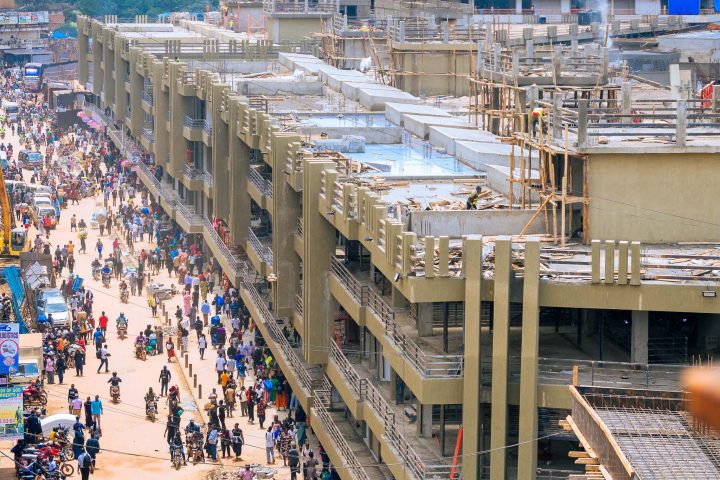
On December 13, 2025, Kampala witnessed a significant breakthrough in flood control when heavy rainfall did not lead to the typical flooding of low-lying areas, including the historically flood-prone Nakivubo corridor and its central business district. This rare occurrence marked a shift in the city’s approach to managing seasonal rainfall and its devastating effects on urban infrastructure.
Rain began around 12:15 a.m. on December 13, and under normal circumstances, such a downpour would have resulted in flooded streets, blocked traffic, and halted business activities. Yet, the city remained dry, and by morning, life resumed without any major disruptions in flood-prone zones. Experts attribute this unexpected outcome to the ongoing redevelopment of the Nakivubo Channel, a project spearheaded by Dr. Hamis Kiggundu and his company Kiham Enterprises.
The Problem: A History of Blockage and Flooding
For years, the Nakivubo Channel has struggled with severe blockages due to waste dumping, encroachment, and sediment buildup. As an open drainage system, it became increasingly difficult to maintain, causing frequent overflows during heavy rains. The channel’s narrowness exacerbated the problem, flooding surrounding streets and neighborhoods after even brief showers. With Kampala’s population growth, the deficiencies of this system became even more apparent.
A Comprehensive Solution: Dr. Kiggundu’s Vision
In July 2025, Dr. Kiggundu presented a comprehensive redevelopment plan to address Kampala’s flooding crisis. The plan proposed transforming the open Nakivubo system into a modern, efficient drainage network designed to manage water flow better. President Yoweri Museveni approved the project in August 2025, recognizing it as a long-term solution for Kampala’s recurring flooding problems.
Since then, Kiham Enterprises has worked diligently to clear and desilt the Nakivubo Channel, with significant progress in enhancing water flow. Early interventions, such as removing accumulated waste and sediment, have already shown considerable improvements.
A Glimpse of Success Amid Ongoing Work
While the Nakivubo redevelopment is still a work in progress, its early results have been promising. In October 2025, Kampala experienced severe flooding, showing that the project was still under construction. However, by December 2025, several key sections of the channel had been cleared, and the channel’s width was doubled from 6 meters to 12 meters. This expansion allowed rainwater to flow more freely, and during the December 13 rainfall, the water was effectively managed, with no overflow into surrounding areas.
Proactive Flood Prevention: The Future of Flood Management in Kampala
This shift in approach marks a transformative change in how Kampala manages flooding. Instead of relying on reactive measures, such as cleanups after floods, the redevelopment of the Nakivubo Channel focuses on structural changes that proactively prevent flooding. While future rainstorms will test the system’s full capacity, the events of December 13 suggest that Kampala is moving towards a more sustainable, long-term solution to its flooding challenges.
As work continues on the project, there is growing optimism that the Nakivubo Channel will provide lasting protection against seasonal floods. For a city that has long endured the disruptions caused by rain, the peaceful morning of December 13 offers hope that modern infrastructure solutions will finally resolve Kampala’s flooding issues.